Perfect Isn't the Brief Anymore: Why the Best Brow Is the One Nobody Notices
Updated: Jun 5
For a long time, the benchmark in PMU was perfection. Symmetrical. Saturated. Defined. The kind of result that looked unmistakably intentional and polished.
That benchmark is shifting. And the shift is significant enough that if you're still working toward that older version of perfect, you might be producing work your clients are quietly ambivalent about.
The new brief is undetectable.
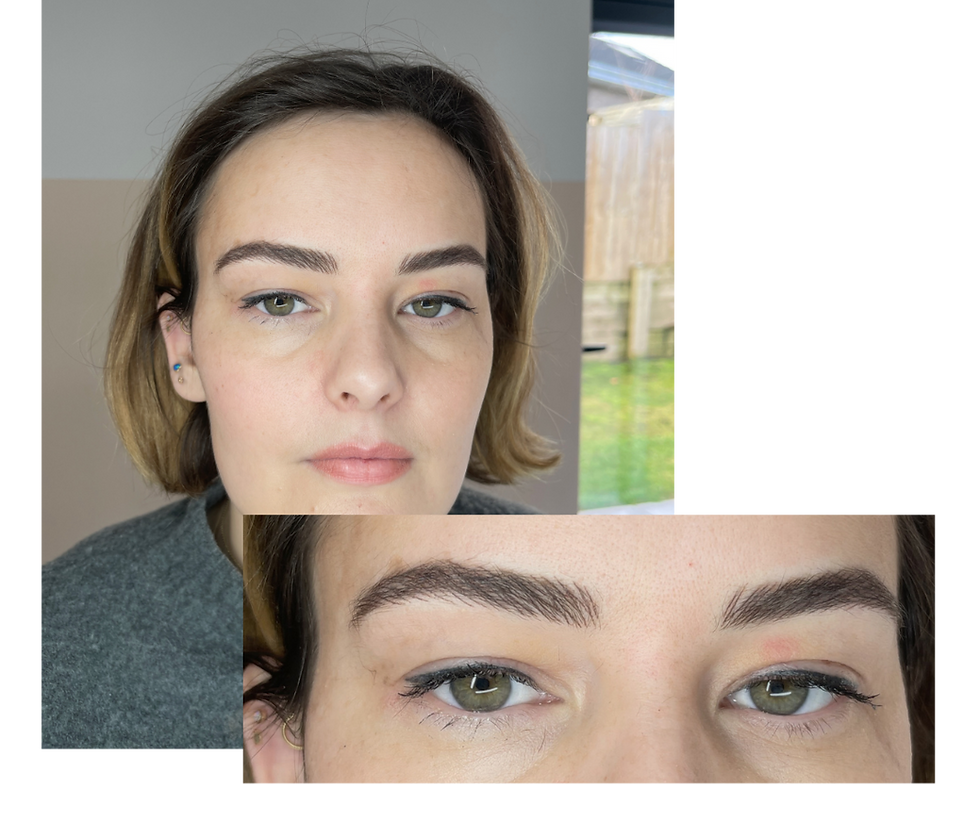
Clients are coming in asking for brows that look like their own brows, only better. They want to wake up looking like themselves, not like someone who's had something done. The Instagram brow, the architectural arch, the heavily saturated powder finish, these are increasingly what clients are asking you to steer them away from, not toward.
This is actually harder to produce than the old standard of perfect. Undetectable requires a different kind of skill: restraint, subtlety, a deep understanding of how natural brows actually grow and where they have natural variation. A perfectly symmetrical brow can look beautiful and still look wrong on a face that has natural asymmetry built into it. An "imperfect" brow that follows the client's own architecture can look completely right even in a photograph taken close up.
What's driving this:
Social media literacy has matured.
Clients have seen enough heavily done PMU to know they don't want it. They can identify the telltale signs
The too-perfect arch, the uniform saturation, the slightly unnatural colour. They're specifically asking to avoid those things.
The wider beauty conversation has shifted toward authenticity.
Skin texture, natural features, the quiet rejection of heavily filtered aesthetics — PMU is being asked to follow that direction. The "no-makeup makeup" standard that's been building in cosmetics for years is now arriving in permanent makeup.
Clients are thinking about longevity differently.
A heavily done brow is a commitment to a very specific look for one to three years. A subtler result ages more gracefully, works across more contexts, and doesn't foreclose options. Clients are thinking ahead in a way they perhaps didn't five years ago.
For artists, this shift is an invitation. It rewards deep skill over impressive fresh photography. It rewards consultation quality, really understanding what a client means by "natural" over technical flash. It rewards the kind of work that doesn't announce itself.
The best results going forward won't necessarily be the most dramatic ones in your portfolio. They'll be the ones where someone looks at the photo and genuinely can't tell.

If This Resonates With You
I've created a free guide:
Why Good Technique Heals Badly
It explores the factors beyond technique that affect your results
(including understanding what clients actually want vs. what they say).
Download it here: Guides


Comments