The Brow Tinting Effect: What It Is and Why Technicians Are Changing How They Work
Updated: Jun 5
If you've been paying attention to what clients are saving and sharing recently, you'll have noticed a particular aesthetic gaining real momentum: brows that look tinted rather than tattooed.
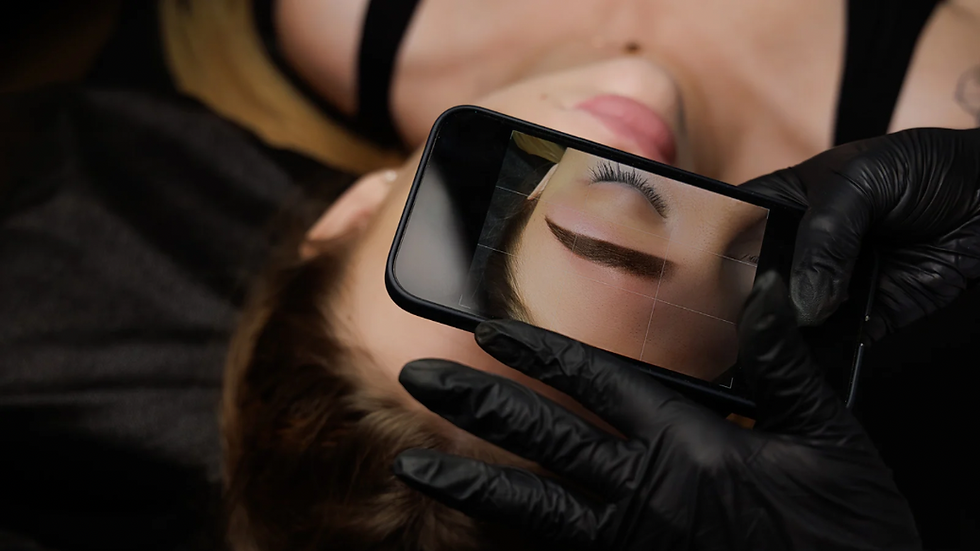
It's a soft, even, slightly diffused colour effect, less defined at the edges than a traditional powder brow, with a natural variation in tone across the brow rather than uniform saturation. It reads as enhanced but completely believable. At a glance, you could mistake it for a good brow tint or lamination result rather than anything permanent.
This isn't a specific named technique so much as an aesthetic outcome and different artists are arriving at it through different routes. But the technical common ground is worth understanding, because producing it reliably requires a deliberate shift in how you approach shading.
What creates the tinted look:
The defining quality is soft, gradient saturation with no hard edges — particularly at the front of the brow. Traditional powder brows often begin with a defined front edge, even if that definition is subtle. The tint-effect brow starts with almost no edge at all — the pigment fades in gradually, mimicking how a tint stains both the skin and the hair without creating a clear boundary.
The texture is also important. Tinted brows look slightly uneven in tone in the way real brows do — a little darker at the tail and arch, a little lighter through the body and front. Uniform saturation reads as artificial. Controlled variation reads as natural.
What it requires from your technique:
Lighter pressure in the front third, built gradually rather than starting with full saturation. A slower speed in transitional areas to allow the pigment to diffuse slightly rather than sit in sharp definition. Pigment choices that are slightly cooler or more neutral at the front, warmth tends to read as more "tattooed" at lighter saturation levels.
Layering is more important than a single thorough pass. The tint effect is built rather than placed. It benefits from multiple lighter passes over the same area rather than one heavier deposit.
Why technicians are making the shift:
It's partly the broader move toward natural aesthetics already happening across PMU. But it's also practical: this approach heals more predictably on a wider range of skin types. The lighter saturation at the front means less visible patching if healing isn't perfect. The soft edges mean there's no harsh border to expose if the pigment fades unevenly.
It also opens a conversation with a client demographic that previously felt PMU wasn't for them, the ones who wanted the result of a regular tint without the maintenance, but were put off by anything that looked too permanent or too done.
If you haven't started experimenting in this direction, it's worth doing. The clients asking for it are only going to become more numerous.

I'm curious: have you noticed this "brow tint effect" in your own consultations?
Are clients asking for softer, more natural work than they used to?
Drop a comment - I love hearing what's shifting in your corner of the PMU world.
And if you want more of these honest industry conversations, follow along or grab my free guide:

Or ready to take your pixel work further?
Pixel Perfection walks you through the
techniques, the troubleshooting, and the
healed results.
Everything you need to level up
your machine brows.
Check it out in the Guides page here →


Comments